
Embedded IP Camera Module Integration
Embedded camera modules for teams that need video capture, hardware encoding, RTSP / WebRTC streaming, OSD support, network output, and compact integration inside unmanned, robotics, or industrial vision systems.
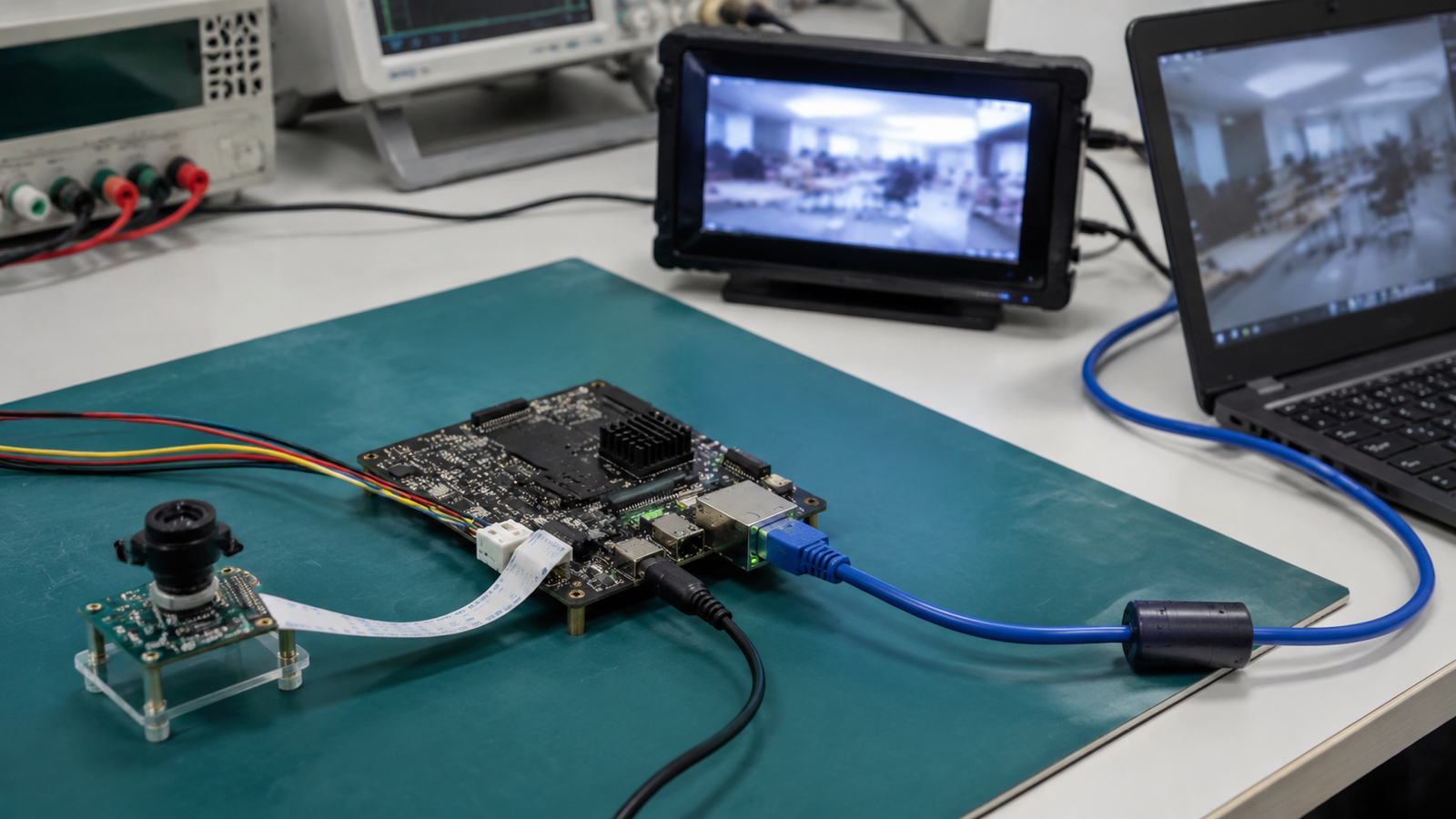
Definition
What is embedded IP camera module integration?
Embedded IP camera module integration means combining camera capture, hardware encoding, streaming protocol, network output, OSD workflow, power input, and mechanical fit into a compact board-level video path for embedded systems.
An embedded IP camera module should not be evaluated only by sensor resolution. Encoding, protocol behavior, network output, power input, and receiver workflow determine whether the module is usable inside the final system.
Typical Requirements
What embedded teams usually need to confirm
| Integration Area | What to Confirm | Warum es wichtig ist |
|---|---|---|
| Kodierung | H.264 / H.265 workflow, bitrate behavior, resolution, and frame rate. | Encoding behavior affects delay, bandwidth, storage, and motion detail. |
| Streaming | RTSP, WebRTC, RTP, HTTP, and receiver-side playback workflow. | The system must work beyond the module output and remain usable on the final receiver. |
| Network output | RJ45, 10M / 100M network behavior, IP assignment, and system connection path. | Network setup affects integration into robots, industrial systems, and unmanned platforms. |
| Power input | Available voltage range, connector, load behavior, and platform power design. | Power instability can create video dropouts or inconsistent behavior. |
Integration Risks
Where embedded camera integration usually fails
Protocol mismatch
The module may support video output, but the final application may require a different streaming, decoding, or software workflow.
Receiver-side delay
RTSP, WebRTC, decoder settings, and display software can add delay after the module output.
Board-level fit
Connector location, lens board position, heat behavior, cable direction, and mounting space affect real integration.
Relevant Thyraon Options
Product options that may fit this application
IOT_35X32 embedded camera module
For embedded systems requiring board-level video capture, H.264 / H.265 encoding, RTSP / WebRTC support, OSD, RJ45 network output, and 5–30V input.
Lens board and module fit review
For teams that need to confirm board size, lens board direction, connector routing, and installation space.
Streaming workflow review
For projects where receiver-side playback, ground software, or network configuration is part of the final evaluation.
Selection Questions
Before requesting an embedded IP camera module review
Embedded camera module selection should confirm not only sensor and resolution, but also encoding, streaming protocol, network output, board fit, and receiver-side workflow.
Encoding and streaming
What H.264 / H.265 configuration, RTSP / WebRTC workflow, bitrate behavior, and receiver software are required?
Board-level fit
What board size, lens board position, connector direction, network output, and installation space are available?
Power and system path
What voltage range, interface, storage requirement, OSD need, and system integration path should be reviewed?
Next Step
Send your embedded video module requirements.
Thyraon can review encoding, streaming protocol, network output, OSD needs, board fit, and power input before sample selection.