
Последние посты
-
Что считать успешным испытанием видео FPV-дрона при слабом освещении?
Определите критерий успеха до оценки изображения Испытание FPV-видео при слабом освещении полезно, когда одна указанная конфигурация от камеры до дисплея соответствует заранее заданному критерию в зафиксированных условиях. Одного более яркого изображения недостаточно. Разделите требования…
-
FPV-видео при слабом освещении для ИИ: оценивайте подтверждения, а не яркость
При слабом освещении изображение может выглядеть ярче, но стать менее полезным для системы ИИ. Усиление, экспозиция и обработка изображения могут улучшить картинку для оператора, тогда как шум, смазывание, потеря деталей в светах или тенях либо сжатие удаляют контуры, текстуру и временную информацию…
-
Интерфейсы от FPV-видео к управлению: определите передачу данных
Чётко определите видеотракт и тракт управления FPV-дрон объединяет тракт камеры, тракт приёма и отображения и тракт управления полётом. Они взаимодействуют, но чёткое изображение или результат бортовой обработки не доказывают, что вся…
-
От демонстрации FPV-видео к OEM-оценке: готов ли вход?
Демонстрация открывает обсуждение Чёткая демонстрация FPV-видео показывает одну конфигурацию в определённых условиях. Она не подтверждает, что тот же модуль, кабель, источник питания и принимающее оборудование будут вести себя одинаково в…
-
Замена FPV-камеры: список проверок для повторной валидации видеотракта
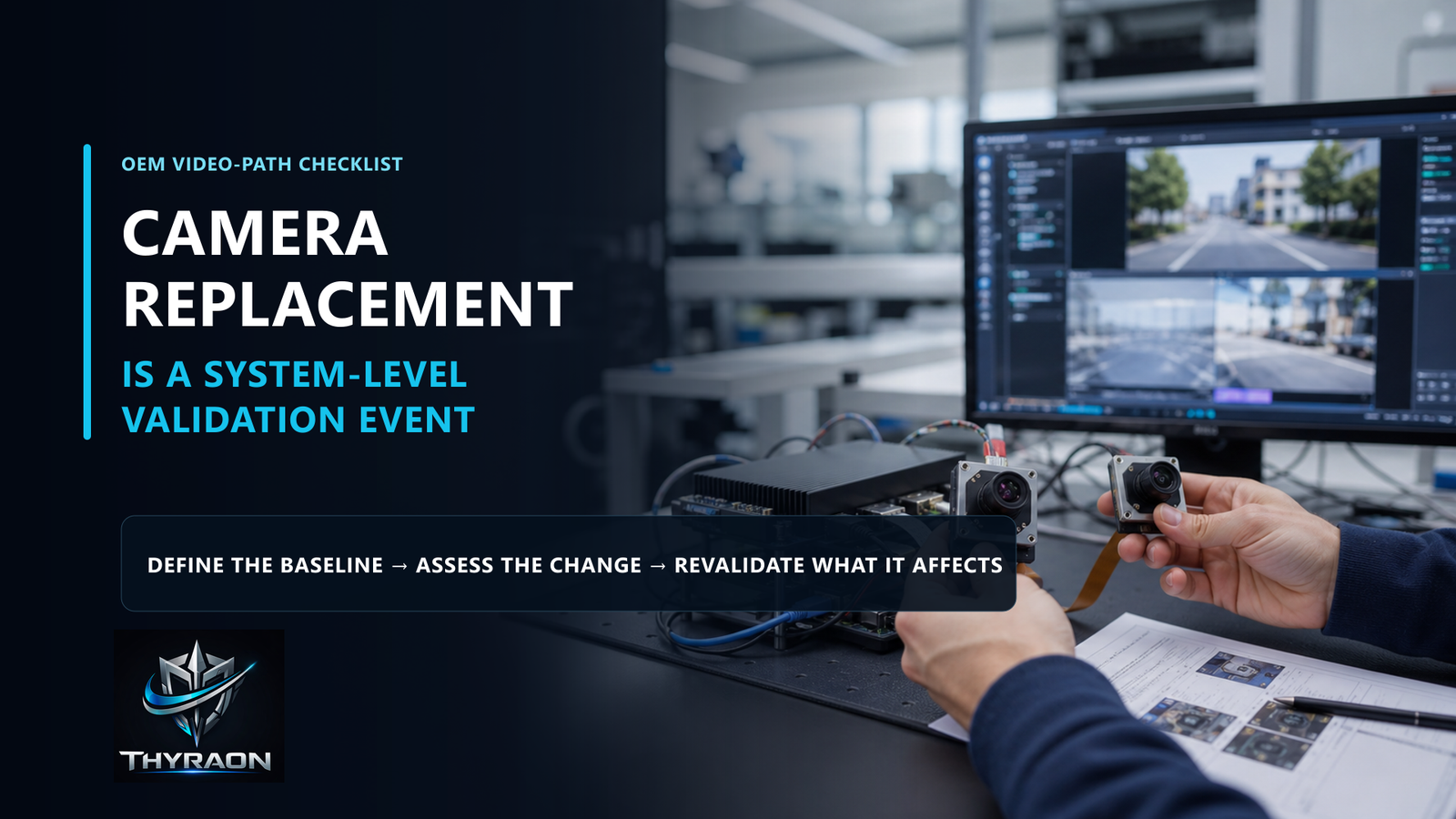
Краткий ответ: замена встраиваемого модуля камеры должна запускать анализ влияния на весь тракт видеовхода. Совпадение разрешения, частоты кадров или названия интерфейса не гарантирует совпадения электрического поведения, формата, задержки, восстановления…
-
Готовность FPV-видеовхода: 7 вопросов перед включением в OEM-проект
Модуль камеры не следует включать в OEM-проект только потому, что он включается, передаёт видео и формально соответствует интерфейсу. Для FPV-дрона видеомодуль — начало тракта машинной информации: КАМЕРА → ИНТЕРФЕЙС → ВЫЧИСЛЕНИЯ → ВИДЕОТРАКТ…